GI Endoscopy · 2 min read
Severe Esophageal Necrosis Following Caustic Ingestion

CASE REPORT
Dr Jhordy Garcia, Department of Gastroenterology, Hospital Francisco Moscoso Puello, Dominican Republic
Final Diagnosis
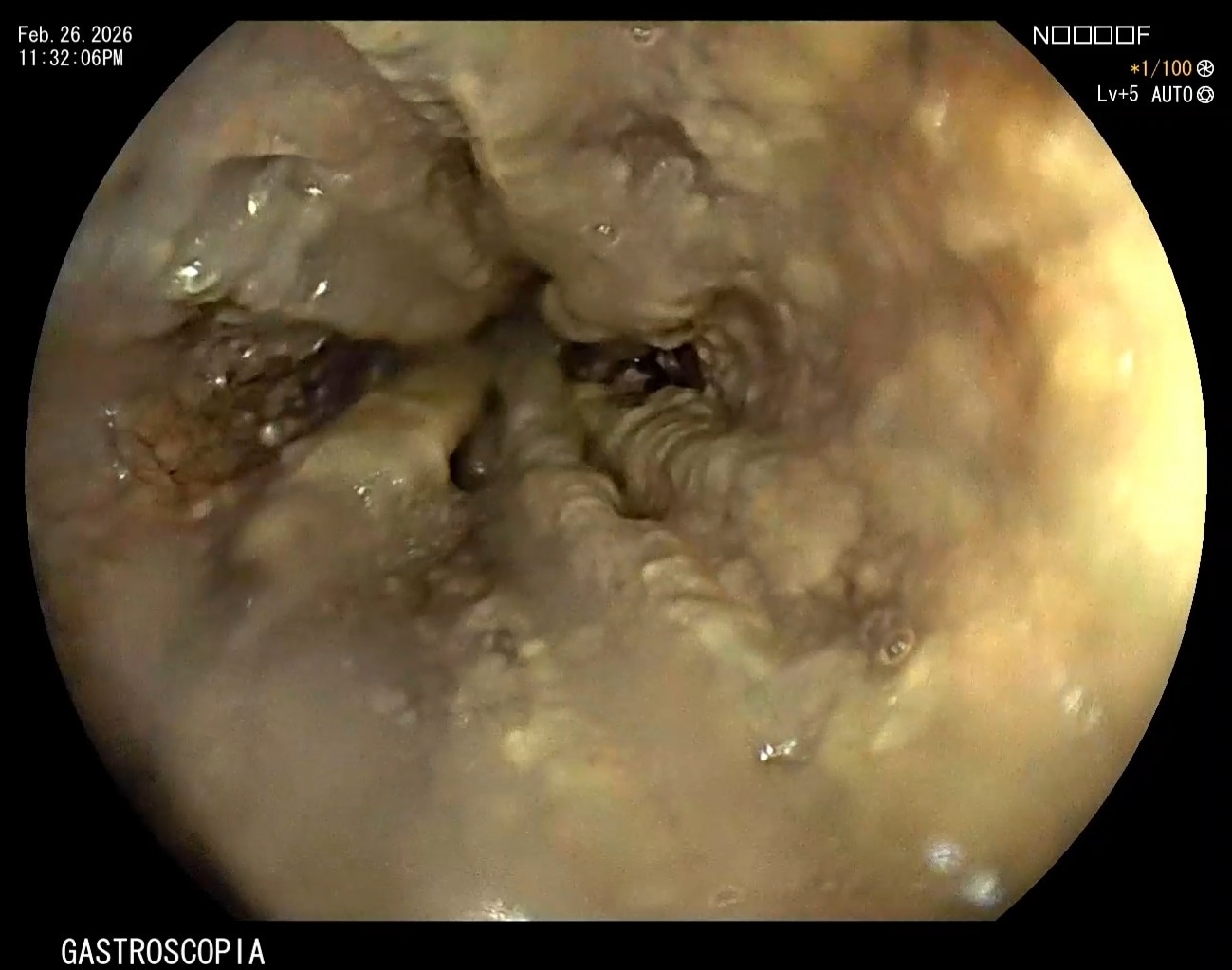
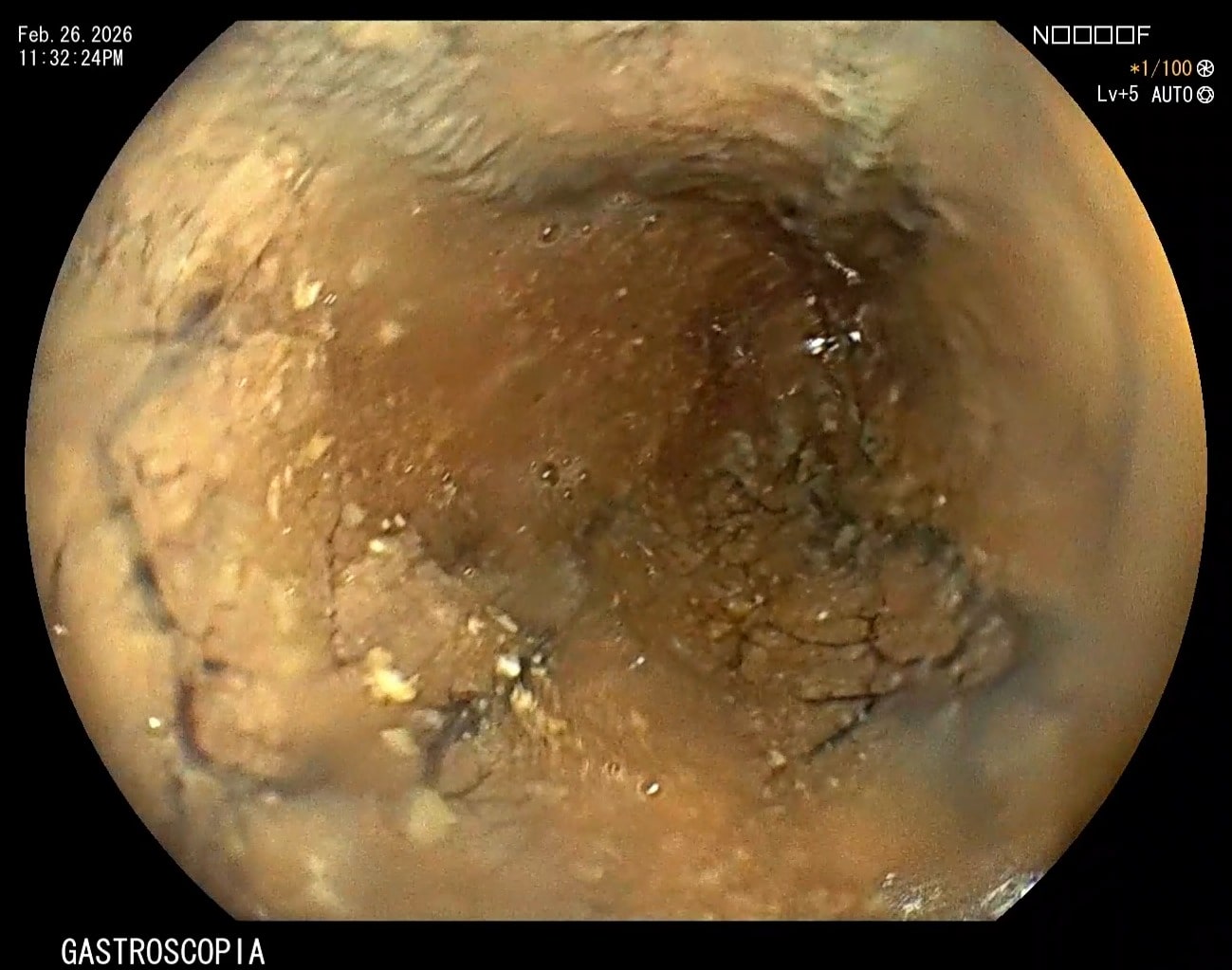
Extensive esophageal necrosis from sodium hydroxide ingestion.
Patient Demographics
A 58-year-old male.
Clinical History
The patient presented after intentional ingestion of a caustic substance (sodium hydroxide, a cleaning material) in a suicide attempt. Endoscopy was performed 6 hours post-ingestion. He is currently receiving ventilatory support in the intensive care unit.
Endoscopic Findings
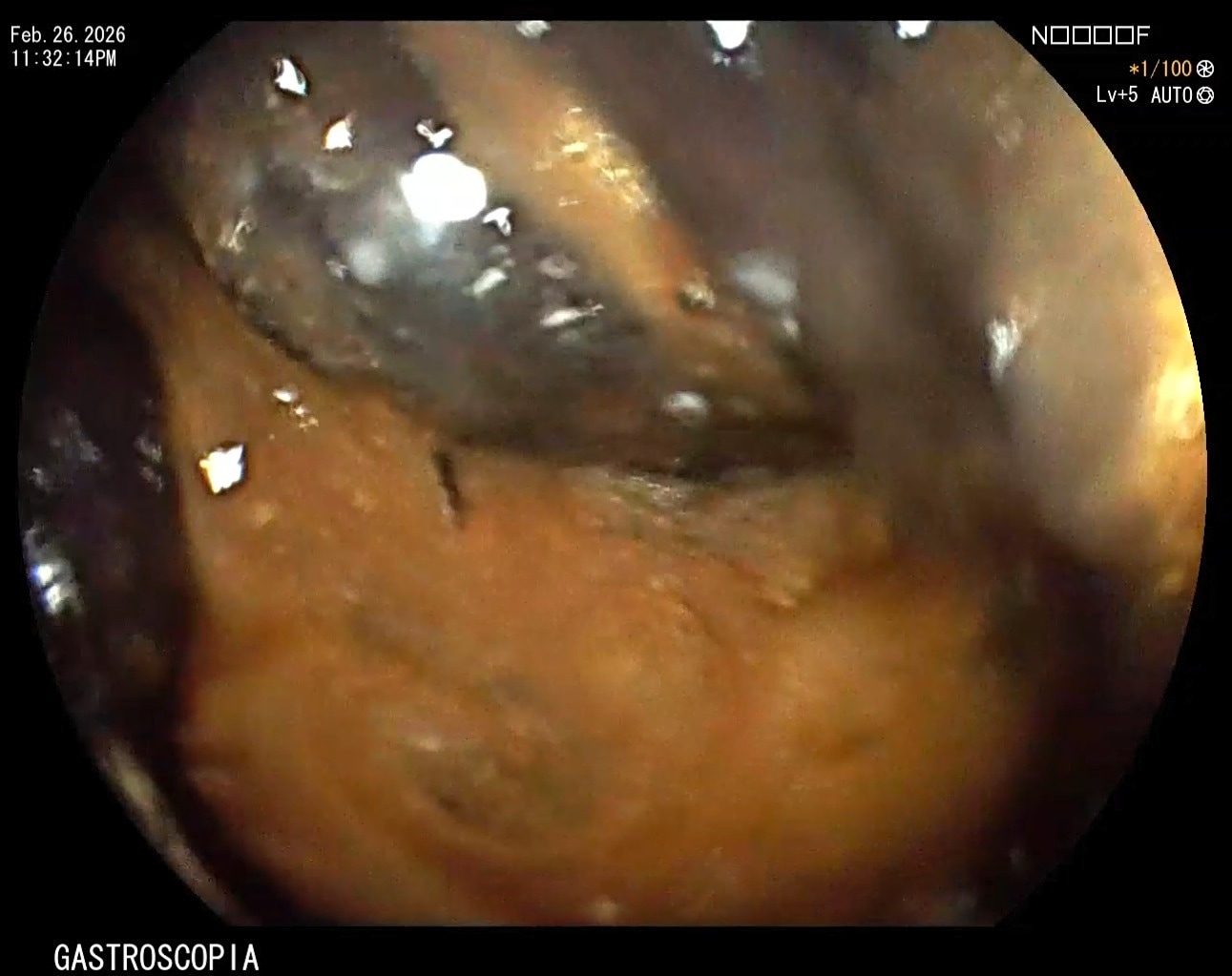
- Extensive necrosis of the esophageal mucosa was observed throughout the visible esophagus.
- Significant damage to the vocal cords was noted.
- The scope was not advanced beyond the esophagogastric junction due to concern for perforation.
Endoscopic Technique
Endoscopy was performed approximately 6 hours after caustic ingestion. A standard endoscope was used. The procedure was limited to the esophagus and did not proceed beyond the esophagogastric junction to mitigate the risk of iatrogenic perforation given the severe mucosal damage observed.
Discussion
Caustic ingestion poses a significant medical emergency with high morbidity and mortality. Sodium hydroxide, an alkaline substance, typically causes liquefactive necrosis, leading to deep tissue injury and potential perforation, as well as stricture formation in survivors. The extensive esophageal necrosis observed within hours of ingestion indicates severe injury. The involvement of the vocal cords suggests aspiration or direct contact during ingestion, further complicating the patient's respiratory status and prognosis. The decision to limit the endoscopic examination due to perforation risk was appropriate and highlights a critical aspect of managing caustic injuries. Early endoscopy is crucial for assessing the extent of injury and guiding management, but it must be performed cautiously. The patient's presentation with extensive necrosis and respiratory compromise strongly suggests a grave prognosis.
Key Learning Points
- Caustic ingestion is an urgent medical emergency requiring prompt evaluation.
- Sodium hydroxide causes liquefactive necrosis, often leading to extensive and deep tissue damage.
- Early endoscopy is essential for assessing injury extent but should be performed carefully, stopping if perforation risk is high.
- Vocal cord involvement signifies severe upper airway injury and worsens prognosis.
- Extensive esophageal necrosis observed within hours of ingestion is indicative of a very poor prognosis.
References
- Hall AH, et al. Caustic injury to the upper gastrointestinal tract. J Emerg Med. 1999;17(4):713-718.
- Contini S, et al. Caustic injury of the esophagus and stomach: An analysis of 170 patients. Dig Dis Sci. 2005;50(12):2273-2278.
- Poley JW, et al. The management of caustic injuries to the upper gastrointestinal tract. Endoscopy. 2002;34(7):559-563.
For your teaching file
Save this article as a PDF
Drop your email and we'll open a print-ready version you can save as a PDF — and you'll start getting our weekly GI endoscopy newsletter.